
- Mercedes CLA EQ 250+ named best overall road-trip EV, requiring around 14 minutes of charging during an 800-km family journey
- Renault 5 E-Tech and Volvo EX30 offer efficient electric options for families seeking smaller, more accessible cars
- Toyota C-HR is the most economical hybrid on Green NCAP’s simulated road-trip route
- Dacia Bigster combines family-friendly space with an estimated 847-km touring range on one full tank
- Independent Green NCAP testing considers passenger load, holiday luggage, air conditioning and predominantly highway driving
LEUVEN, BELGIUM – Millions of families across Europe will pack their cars and head off on holiday this summer, but which models are best suited to a long road trip?
To help drivers choose, independent vehicle assessment organisation Green NCAP has identified some of the strongest-performing cars for an efficient family holiday journey.
The analysis highlights models that combine energy efficiency, usable touring range, and manageable charging requirements, helping families reach their destination with fewer stops and less disruption.
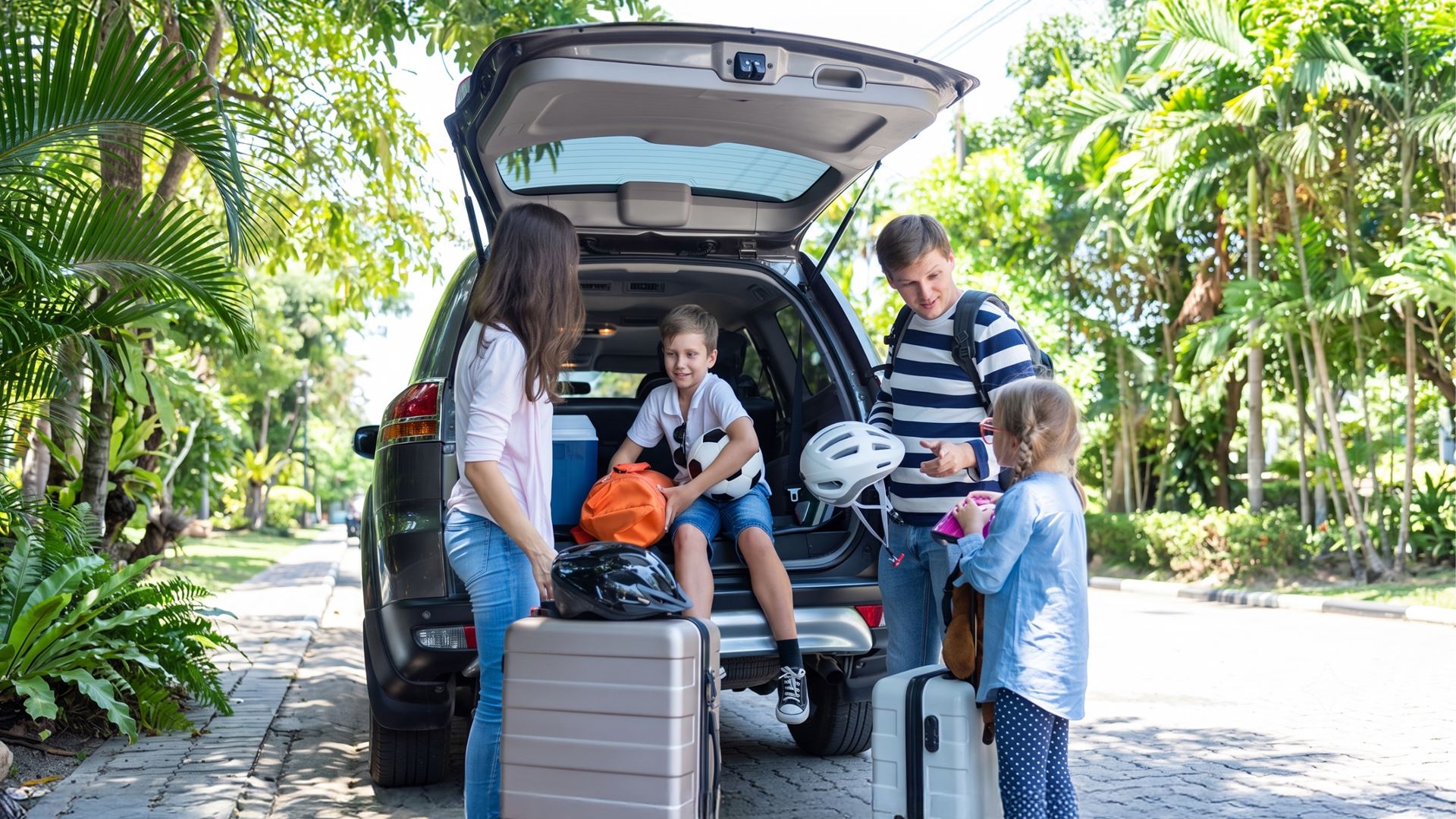
Green NCAP analysed a typical journey of 800 km – nearly 500 miles – using a mix of motorway, rural and urban roads. The assessment accommodates a family of four and their luggage, as well as the use of air conditioning in hot weather.
Green NCAP has analysed the test results of every car it has assessed since late 2025, when the programme introduced a revised Sustainability Rating together with new Driving Experience scores. The results show that when it comes to holiday travel, an electric vehicle with a bigger battery does not necessarily deliver a better or more efficient journey.
Best overall road-trip EV: Mercedes-Benz CLA EQ 250+
With increasing numbers of Europe’s drivers switching to electric cars, usable range, charging performance, and real-world efficiency are becoming increasingly important considerations for a family road trip.
Green NCAP’s research shows that a bigger battery alone does not guarantee an easier long-distance journey. Some large family cars with equally large batteries score poorly for efficiency because of their weight, size, aerodynamic drag, and wide tyres, which create higher rolling resistance.
Electric SUV models including the Kia EV9, BYD Sealion 7 and Cadillac Optiq consume significantly more energy than the strongest-performing models in Green NCAP’s analysis.
By contrast, the Mercedes CLA EQ, tested in 250+ specification, shows how fitting a large
85-kWh battery to a smaller four-door family car can create an excellent package for long-distance driving.
Of every electric car assessed, Green NCAP found that the CLA EQ delivered the lowest energy consumption, at 16.5 kWh/100 km, over the simulated 800-km road trip. It also achieved the longest touring range, travelling an estimated 605 km – 376 miles – on a single charge.
Starting the journey with a full battery, Green NCAP calculates that the CLA EQ 250+ would require only around 14 minutes of fast charging to complete the 800-km trip. This is the amount of charging needed for this specific journey, rather than a full standard charging session.
Green NCAP tests show that the CLA EQ 250+ can charge at an average of 286 kW, taking less than 23 minutes to boost the battery from 10 to 80 per cent.
The CLA EQ 250+ also achieved a five-star Green NCAP sustainability rating, making it the standout overall electric car in the organisation’s family road-trip analysis.
Best compact EV: Renault 5 E-Tech
For families seeking a small electric option, the Renault 5 E-Tech is a strong compact performer.
The five-door hatchback achieved a five-star Green NCAP sustainability rating and combines a 52-kWh battery with energy consumption of 19.9 kWh/100 km.
This gives the Renault 5 E-Tech a touring range of 296 km – 184 miles – under Green NCAP’s road-trip conditions.
Its average charging power of 72 kW means it can charge from 10 to 80 per cent in
31 minutes. Green NCAP calculates that it would require around 80 minutes of total charging time to complete the 800-km journey.
Although it requires longer charging stops than the Mercedes, its five-door layout, efficient energy use, and smaller dimensions make it a versatile option for families willing to plan additional breaks into their journey.
Best EV for couples and city-break rentals: MINI Cooper E
For couples, solo travellers or holidaymakers travelling light, the MINI Cooper E offers impressive energy efficiency in a compact package. It could also prove well suited to city-break rentals where shorter journeys and easy parking are greater priorities than maximum luggage capacity.
When loaded and driven with the air conditioning running, the three-door Cooper E consumed 19 kWh/100 km, making it the second-most energy-efficient electric car assessed by
Green NCAP.
However, its smaller 36.6-kWh battery and average maximum charging speed of 56 kW limit its touring range to 224 km (139 miles).
Green NCAP calculates that the Cooper E would require a total of 104 minutes of charging to complete the 800-km journey.
Its limited rear-seat access, luggage space and touring range mean it is less naturally suited to a family of four, but it remains an efficient option for couples or shorter holiday journeys.
Best practical electric crossover: Volvo EX30
Families requiring more cabin and luggage space may find the Volvo EX30 a more practical electric alternative.
The extended range version of the compact crossover can complete the same 800-km journey with around 59 minutes of total charging and provides more room for four occupants and their luggage than the smaller Renault 5 E-Tech or MINI Cooper E.
Its touring range of 344 km – 214 miles – is respectable, and the Volvo EX30 also achieved a four-and-a-half star Green NCAP sustainability rating.
Its combination of crossover practicality, manageable charging requirements and strong sustainability performance makes it one of the most rounded smaller electric options in the analysis.
Most economical hybrid: Toyota C-HR
For families not ready to switch to a fully electric car, a hybrid can offer a useful combination of long-distance range and lower fuel consumption.
The Toyota C-HR delivered the best fuel-efficiency result of the hybrid and combustion-powered cars in Green NCAP’s road-trip analysis.
The compact SUV, which is available with hybrid and plug-in hybrid powertrains, was tested in hybrid form and consumed 5.7 litres of petrol per 100 km across the 800-km mix of motorway, rural and urban roads.
With a 43-litre fuel tank, this gives it a potential touring range of 754 km. The Toyota would therefore require only a brief refuelling stop to complete an 800-km journey.
However, because its petrol engine produces tailpipe emissions and relies on fossil fuel, the Toyota C-HR achieved a Green NCAP sustainability rating of three-and-a-half stars.
Best spacious family hybrid: Dacia Bigster
For a large family car that offers space to stretch out without sacrificing efficiency, the Dacia Bigster is a stand-out performer.
The five-seat SUV boasts a boot large enough to accommodate family luggage, sports equipment, inflatables, and other holiday essentials, while its hybrid petrol powertrain delivers good fuel efficiency.
On Green NCAP’s 800-km touring route, the Bigster consumes 5.9 litres per 100 km.
Thanks to its 50-litre fuel tank, it has an estimated touring range of 847 km, meaning it could complete the entire simulated journey without a fuel stop.
Like the Toyota C-HR, it achieved a three-and-a-half-star Green NCAP sustainability rating.
Its combination of passenger space, luggage capacity, and long-distance range makes it the standout spacious family hybrid in Green NCAP’s analysis.
Best conventional petrol option: SEAT Ibiza
The SEAT Ibiza provides a smaller and potentially more accessible option for drivers who do not require an SUV or electrified powertrain.
The compact family hatchback drives without hybrid assistance yet returns 6.2 litres per 100 km when carrying a family of four and their luggage with the air conditioning running.
Its 40-litre fuel tank provides an estimated touring range of 645 km (400 miles), meaning one refuelling stop would be required during the modelled 800-km journey.
Like the Toyota C-HR and Dacia Bigster, the Ibiza achieved a three-and-a-half-star Green NCAP sustainability rating.
Independent testing drivers can trust
Green NCAP is an independent vehicle assessment initiative, associated with Euro NCAP, and is supported by European governments, consumer organisations, mobility clubs, and universities. Its in-depth laboratory and real-world testing give consumers comparable information about vehicle energy efficiency, emissions, range, charging performance, and overall sustainability.
Rather than relying solely on manufacturer claims or official headline figures, Green NCAP assesses how vehicles perform under controlled and repeatable conditions, including the additional demands created by passengers, luggage, different road types, and climate control.
Our analysis shows that choosing the car with the biggest battery or fuel tank does not necessarily guarantee the easiest journey. Efficiency, usable range, and the amount of time spent charging can make a significant difference during a long trip.
Green NCAP’s independent and in-depth testing enables consumers to compare cars using trusted and consistent results, rather than relying solely on manufacturer claims. We assess real energy consumption, emissions, range, and charging performance across a wide variety of conditions, helping drivers understand how a car is likely to perform in everyday use.
Whether a car is being used for the school run, commuting or an 800-km family holiday journey, Green NCAP provides consumers with the evidence they need to make a more informed and sustainable choice.Dr. Aleksandar Damyanov, Technical Manager Green NCAP