A full class schedule, work, family and other life obligations can make it difficult for many undergraduate students to gain research experience early in their careers. The Discovery Scholars Program (DSP) at New Mexico State University offers a more flexible option for students to explore their interest in research and expand their professional and academic opportunities.
Through DSP, students select a faculty member to mentor them through a research project of their choosing. Together, students and mentors develop a research plan, set development goals and define project milestones.
“The students are really driving this,” said Michèle Shuster, associate dean of research in the College of Arts and Sciences and co-director of DSP. “Some students are brought onto their mentor’s project and develop their own component. Others come up with their own ideas. It’s a whole range.”
The program began in 2014 as an initiative within the College of Arts and Sciences. In the fall of 2024, it expanded to include students and faculty from the College of Health, Education and Social Transformation. With an expanded selection of fields and mentors, students have more opportunities to tailor their research projects to their needs.
“The program is flexible – different disciplines are going to have different expectations, different time constraints and different requirements,” said Michael Hout, associate dean of research in the College of Health, Education and Social Transformation and co-director of DSP. “Discovery Scholars really allows students to craft something that is new, meaningful and right for them”
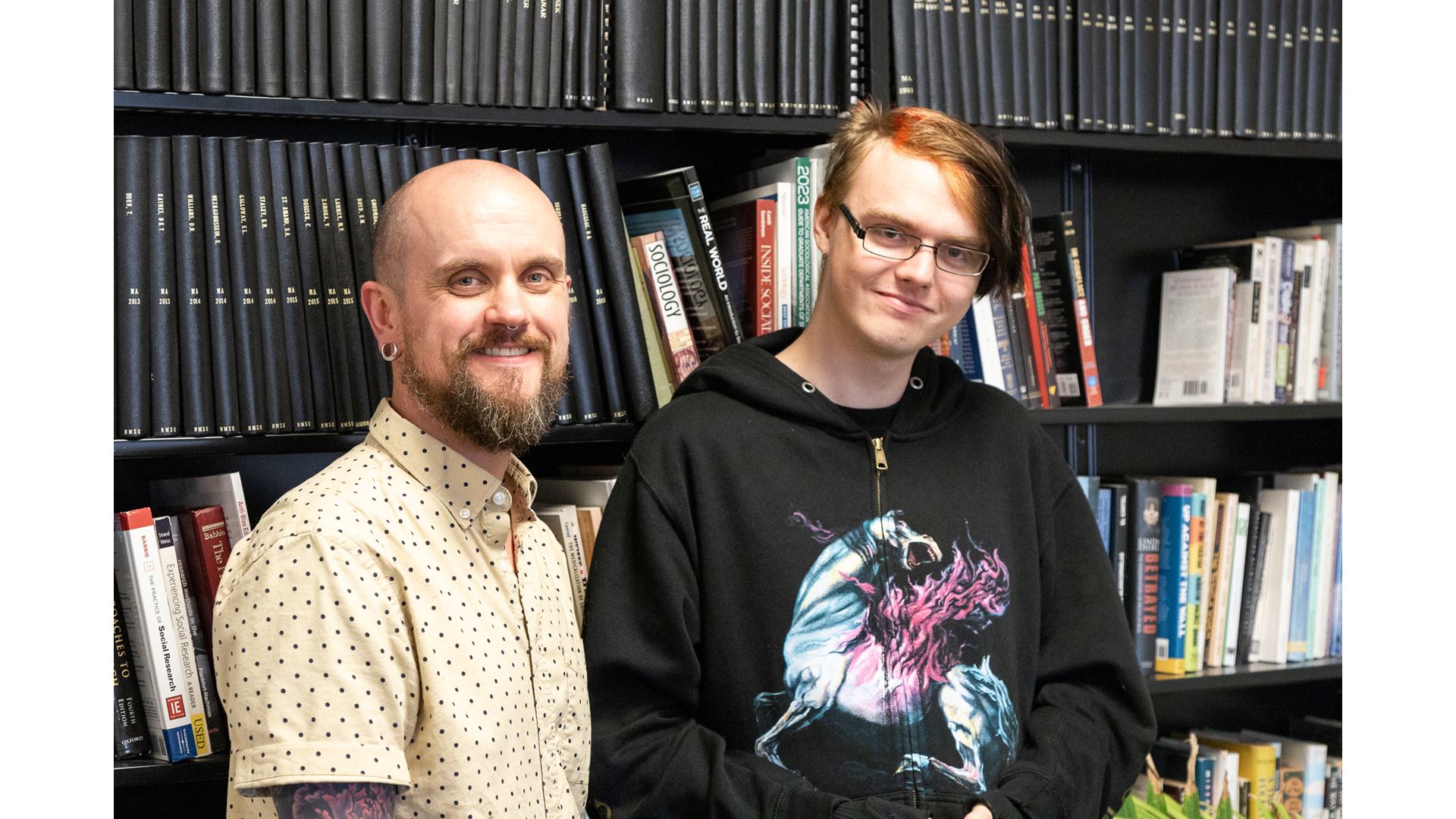
For Cade Borner, a senior studying sociology, the program provided an avenue to pursue a passion project. Borner is working with Marshall Taylor, sociology associate professor, on constructing a song lyric database for metal music. The database will help them study the varieties of presentations of masculinity across the genre.
“I view DSP as giving me a formal stamp of approval on something that I’m doing,” Borner said. “I don't think I would have gotten the job I currently have at sociology department, nor have applied to grad school, nor have been getting involved into another research project I'm doing if it weren't for me being able to express this sort of interest early on.”
“It’s a unique combination of Cade’s interests,” Taylor said. “The cool thing about the program is that it’s structured in such a way that students can approach faculty to try something new, and the material goods that stem from it will help them to be competitive later in their careers. The skills that they’re developing in the program now go well beyond what they could have learned in a course.”
Borner’s goal is to open the dataset to the public, turn this project into a publication and pursue a career in research.
“This program should be known more widely, especially for those in the humanities,” Borner said. “These types of opportunities are few and far between for undergraduates. Every professor can’t have every student do a research-level publication, but DSP allows for that.”
To support students through the Discovery Scholars program, visit https://alwaysanaggie.org/donate/discovery-scholars/
-30-
CUTLINE: The Discovery Scholars Program at New Mexico State University offers a flexible research experience to undergraduate students within the College of Arts and Science and the College of Health, Education and Social Transformation. Cade Borner, a senior studying sociology, and their mentor Marshall Taylor, sociology associate professor, are working together on a project led by Borner. (NMSU photo by Sarah Kimmerly)