
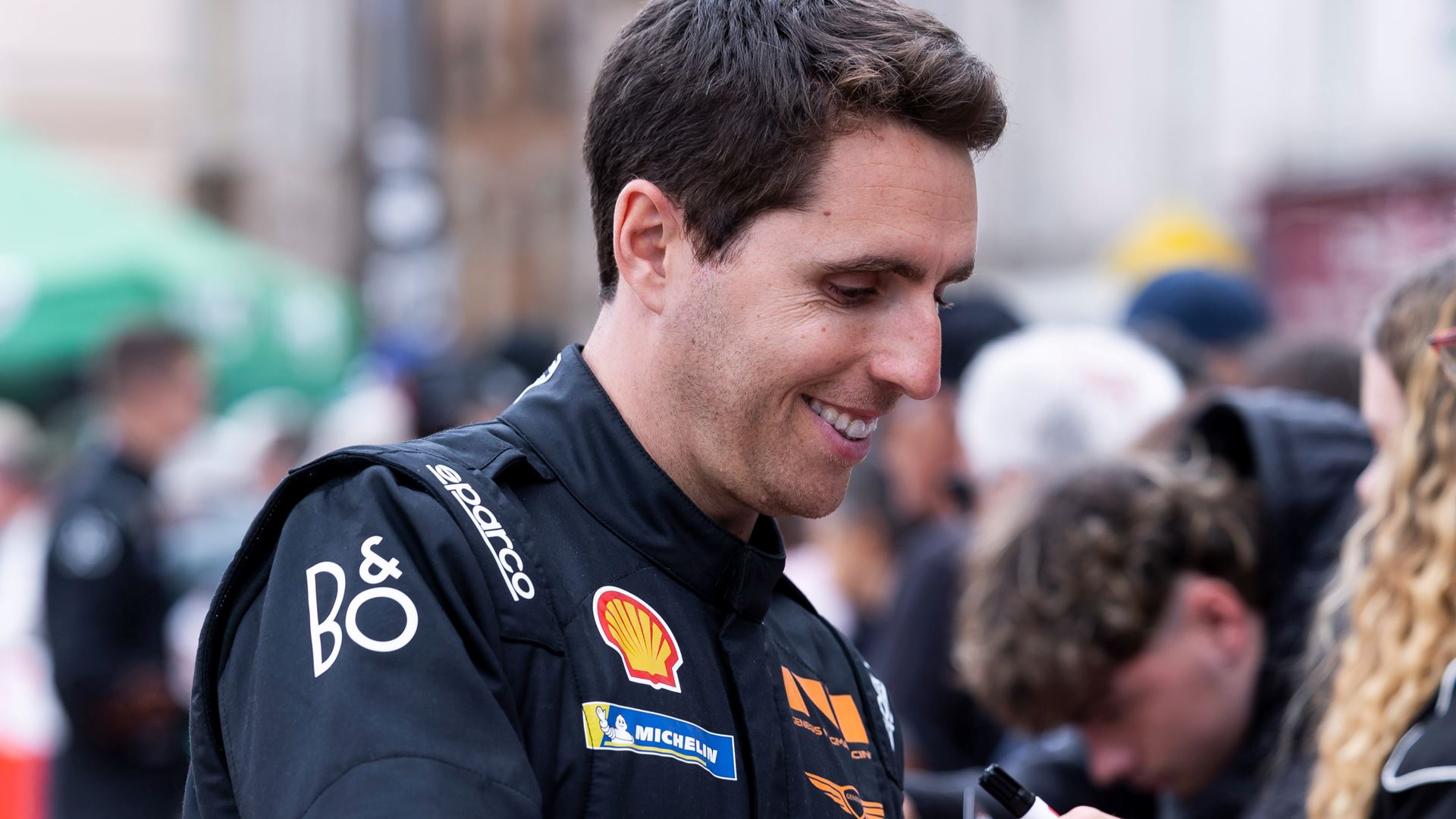
- Genesis Magma Racing Driver Dani Juncadella shares insights ahead of home event at 6 Hours of Barcelona
- This weekend’s event marks Genesis Magma Racing’s first series race at the track, following testing in December 2025 and August 2026
Barcelona, Spain, 15 October 2026: When the FIA World Endurance Championship (WEC) heads to Circuit de Barcelona-Catalunya this weekend, it marks an important fixture on the calendar: the series’ first-ever race in Barcelona — and a home event for Genesis Magma Racing’s Dani Juncadella.
Currently competing in his first full WEC Hypercar campaign, the #19 GMR-001 Hypercar driver has spent the inaugural season building his experience with the team's new prototype alongside his teammates. As the championship moves into its penultimate round, the Spanish driver spoke about racing in front of his home crowd, the learning curve of the GMR-001 Hypercar, and the team's continuous development.
Racing at Home
The addition of Barcelona to the WEC schedule came as a welcome surprise for Juncadella, offering him the chance to compete locally in the top prototype class.
“It means a lot to race at home for me. It’s very special and very unexpected. Before the calendar came out, I never thought I was going to race in a Hypercar in Spain and also in my first year with Genesis Magma Racing,” says Juncadella.
“It’s really special to have family, friends and all the home fans together. I think there will be a lot of new fans to the sport that would love to see the race up close.”
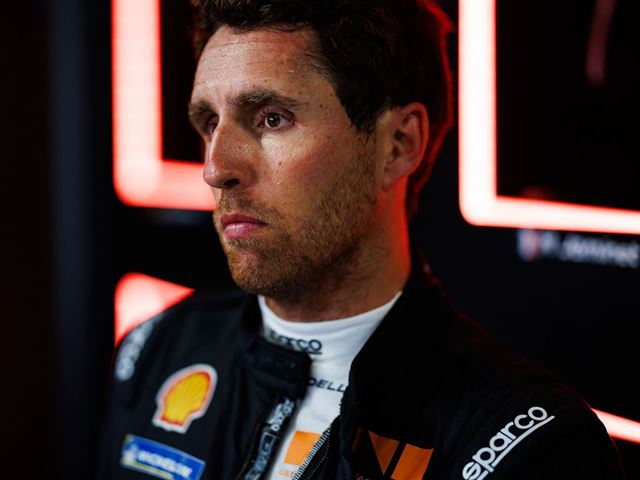
Having family, friends, and local fans trackside naturally enhances the dynamic of a race weekend, and Juncadella welcomes the support.
“Whenever I race at home, having the attention of people and having family and friends close by, I feel like it’s added pressure. But it’s a very beautiful pressure. It’s nice to feel that there’s people there for you, and when you’re driving, you know they are watching you, and I always feel like it gives me an extra boost.”
He is also pleased that Spanish motorsport fans will be able to see the Hypercar category up close for the first time.
“Basically, this is an opportunity for me to be able to race in front of my friends, my family, and all the fans that are following me but not able to come to any of the other races. This time they will have the opportunity to be there and just see how cool the WEC is with such amazing machines like hypercars. It’s the first time that this class is going to be racing in Spain and in Barcelona, so it’s a very special moment. That’s what I’m mostly looking forward to.”
Adjusting to Hypercar Machinery
While Juncadella has built an extensive background in GT and prototype racing, competing in the top Hypercar class requires managing a far more complex vehicle setup on the fly.
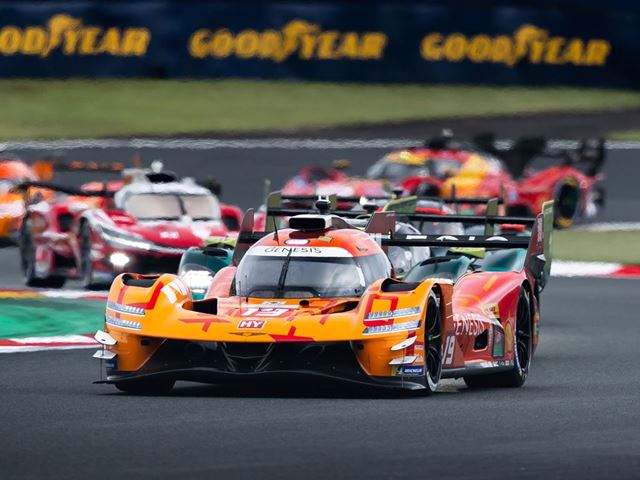
“The biggest adjustment in my first Hypercar season has been how to manage all the systems that are not part of GT racing. Hypercars are technically very complex, so understanding these systems and learning how to use the tools available to adjust the car’s balance and maximise its strengths has been a really interesting and rewarding experience,” Juncadella explains.
“It took me a couple of races to understand certain things. But I think I’m getting up to speed with it. Being able to take the first stints this year is also a new thing for me and something very cool, very nice to understand, because it can decide the outcome of a six-hour race,” he elaborates. There’s a lot you can lose in the first two hours — not a lot you can gain, but there’s a lot you can do. So just learning these things has probably been the biggest challenge,” he adds.
Juncadella points to the team’s engineers and the experience of his co-drivers as key factors in helping him get up to speed.
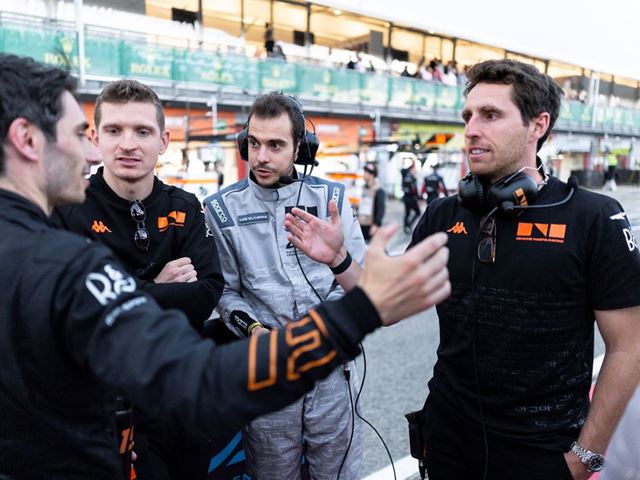
“The engineers have played a massive role in helping me to understand the systems and the tools I can use. I would say even more so with my teammates, because you spend a lot of time during the race weekend with them. There’s a lot of things you can discuss and talk through, and having two very well-accomplished, experienced Hypercar teammates has been a massive benefit for me and I really rely on their knowledge.”
Team Progress and Reliability
Through the initial six rounds of the season, Genesis Magma Racing has focused on establishing operational consistency and refining its baseline package.
“I think the most important lesson is to keep building on the foundation of what we created as a brand. We made a very competitive car, and we made a very strong package to start with. Then there’s just little things that we need to keep learning every race: strategy, different things that happen during the race, different outcomes.
“WEC is not easy in that sense. A lot of things can happen during the race, and as a team, we need to be able to execute at the highest level. Learning from every event and bringing everything we can take away into the next race is going to make us stronger. And the most important thing is, I think we have a competitive car. Because if the biggest issue were the car right now, then our future wouldn’t look as bright,” Juncadella muses with a grin.
The team’s most tangible progress has come in mechanical reliability, despite an early-season testing schedule disrupted by calendar changes.
“I think our reliability is the thing that has improved the most. It was one of our limitations early on. We didn’t have much time for testing with Qatar. One of our biggest worries was reliability going into Le Mans, because we didn’t really have the time to do enough races before that,” Juncadella reflects.
“But reliability has not really been an issue for the last three events after Le Mans. That’s really cool to see. Reliability isn’t something we’ve had to talk about lately, and that’s a really big thing as a team — especially in endurance racing where you need a robust and reliable car. I think that’s what has improved the most.”
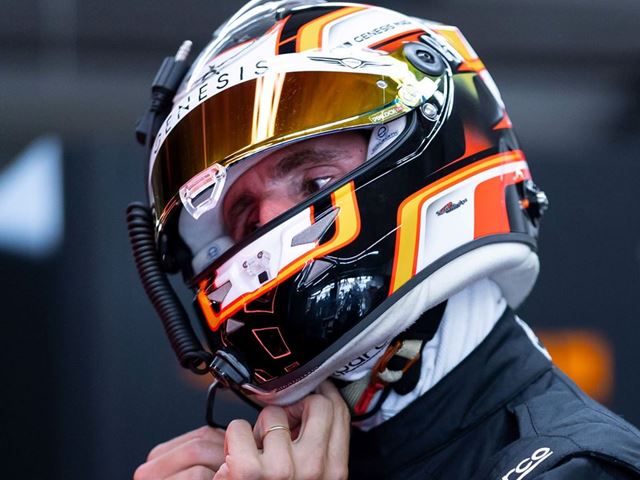
Looking ahead, ongoing work remains centred on refining driver ergonomics and electronics management.
“The team is still looking forward to improving in many areas. On the systems side, we keep exploring what we can do better to help the driver be more comfortable in the car. I think that’s the area that needs the most tuning. But again, I think that’s a bit of a medium- to long-term development. When you speak to other drivers and understand the first year of development of their cars, you realise that there are a lot of things that take time, and it’s something that we probably cannot fully solve in time for Barcelona. But we can still make steps towards our goals.”
The Circuit de Barcelona-Catalunya Challenge
Although the team tested at the circuit last December and once again in August, Juncadella expects tyre degradation and strategy to play a major role over a full race distance.
“Racing at a new track is going to be a challenge for everybody. Luckily, we tested there in December last year, so we have a bit of an idea of how to handle the car. But it’s not the same when you are racing as when you are testing.
“I think it will be a challenge for everybody. This track has a lot of things that can make the race exciting. It’s always a high-degradation race, so that’s going to call for different strategies. We are going to see lots of action, I’m pretty sure,” he says, chuckling.
Assessing the characteristics of the 4.657-kilometre layout, he expects the GMR-001 Hypercar to perform well through the circuit's faster sections.
“Barcelona is a track that will suit our car nicely, especially the high-speed corners. We’ve always been very strong aerodynamically, and we have a very strong car in those medium- and high-speed corners. What’s most tricky is probably the low speed ones, so Turn 5 and Turn 10 are probably our biggest challenges right now. But it’s only two corners, so I think all the other corners are going to be very strong.”
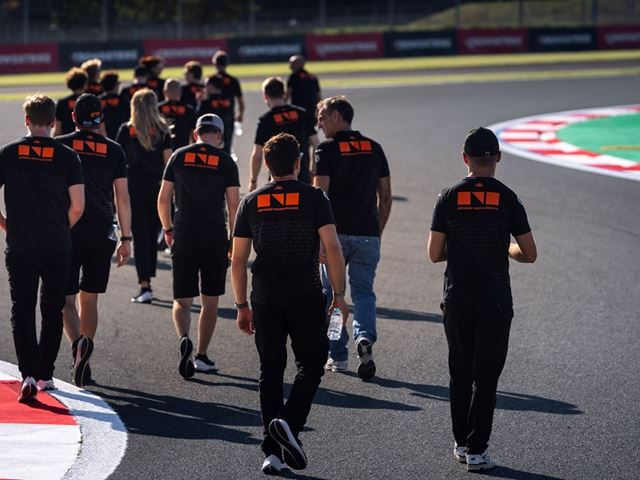
Rather than targeting a specific finishing position, Juncadella emphasises the importance of executing a clean, disciplined race.
“I wouldn’t say that I would consider a good race to be just scoring points or a certain result. I don’t like to think too much about results, because results depend on many things that are sometimes out of your control,” he says, preferring to stay in the moment.
“If we can keep building on everything we’ve done in past races, analyse what has gone wrong in recent events, improve on that, avoid making the same mistakes, and just have a smooth race without penalties — while trying to maximise the package we have — I’m pretty sure we’re going to be fighting for a top result. We just need to focus on the little things, and the big things will come later on.”
About Genesis Motor Europe
Founded in Seoul, Genesis brings a distinct Korean perspective to premium electrified mobility, combining performance, visionary design and commitment to unique hospitality and customer experience excellence.
Genesis is a multi award winning business, earning wide recognition from leading industry experts and consumers across Europe for its brand reputation and products.
The brand’s range GV60, Electrified GV70, Electrified G80 and GV90 is defined by advanced technologies, dynamic performance and Genesis’ distinctive ‘Athletic Elegance’ design philosophy.
Genesis GV90 is the ultimate expression of vision of luxury, innovation and hospitality. This flagship SUV is set to arrive in Europe in 2027.
Genesis is embarking on the next chapter of its journey as a design-driven performance brand, expanding ambitions through its Magma program with high-performance model, GV60 Magma, and Genesis Magma Racing team participation in the FIA World Endurance Championship.
Genesis launched in Europe in 2021 and is headquartered in Frankfurt. Genesis Motor Europe now operates in France, Germany, Italy, the Netherlands, Switzerland and the UK. Spain will be operational soon, taking Genesis into its 7th European market. In 2027, Genesis will continue its European expansion, with plans to launch across several additional markets, including Austria, Denmark, Poland and Portugal.
For more information about Genesis, please visit www.genesis.com.