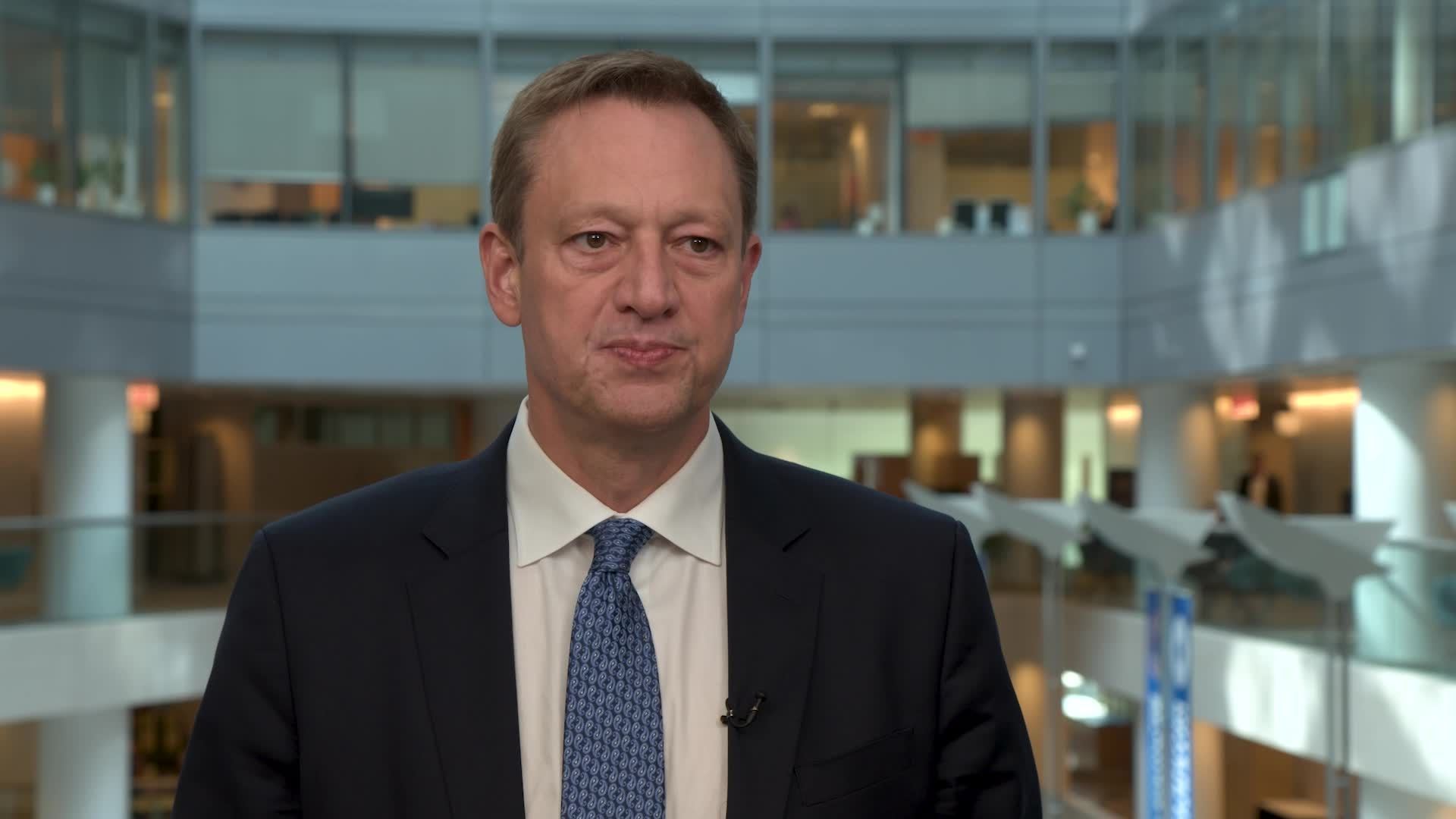
Global financial markets have absorbed the shock of the war in the Middle East so far, said Tobias Adrian, IMF financial counsellor and director of the Monetary and Capital Markets Department. Ahead of the Spring Meetings, he outlined vulnerabilities that could amplify market stress into wider financial instability.
“In a nutshell, risks have increased, markets are adjusting to the war in the Middle East with higher energy prices and renewed inflation concerns. All of this has pushed bond yields up and weighed on risk asset prices. While markets have been orderly to date, global financial conditions could tighten more if the conflict persisted. There are amplifier channels that will be important to watch. High sovereign debt, growing leverage outside the banking system, and changes in market structure can expose vulnerabilities across bond markets, funding markets, and risk assets. This underscores why vigilance matters. The system is largely resilient, but also more interconnected and more dependent on borrowing, raising the potential for spillovers,” Adrian noted.
A financial system that has grown more complex and more leveraged means that when stress materializes, its impact is far from uniform; some economies are proving to be considerably more exposed than others to the current turbulence.
“Emerging markets have been relatively more impacted by recent price moves. Support to emerging markets that was present over the past year has been challenged by the conflict. For example, sovereign credit ratings, contained inflation pressures and support of external financial conditions could be vulnerable. Currencies and capital flows in many energy-importing emerging markets have come under pressure. The composition of capital flows is a big factor. Over time, emerging markets have relied more on debt inflows that are more sensitive to interest rate differentials and less on foreign direct investment. In addition, foreign nonbank investors play a larger role, making flows more sensitive to global risk sentiment. During volatile times, hedge funds and some other investors tend to retrench quickly. That can lead to capital outflows, tight financial conditions and weigh on currencies, particularly in countries with weaker buffers or higher debt,” Adrian said.
These dynamics point to a financial system under stress in ways that require a deliberate and structured policy response. With vulnerabilities spread across multiple markets and country groupings, policymakers face the challenge of addressing immediate pressures while also building resilience against further shocks.
“First, they need to be prepared to support market functioning if stress intensifies. Liquidity and funding facilities should be ready. Second, credible macroeconomic frameworks matter. For emerging markets, strong institutions, adequate foreign exchange buffers, and sustainable government budgets help reduce vulnerability. Third, oversight needs to keep pace with changes in the financial system. As nonbank financial intermediaries play a larger role, better data and stronger supervision are essential to limit amplification and spillover. Acting early is the most effective way to preserve financial stability,” Adrian said.
Read the full April 2026 Global Financial Stability Report here.