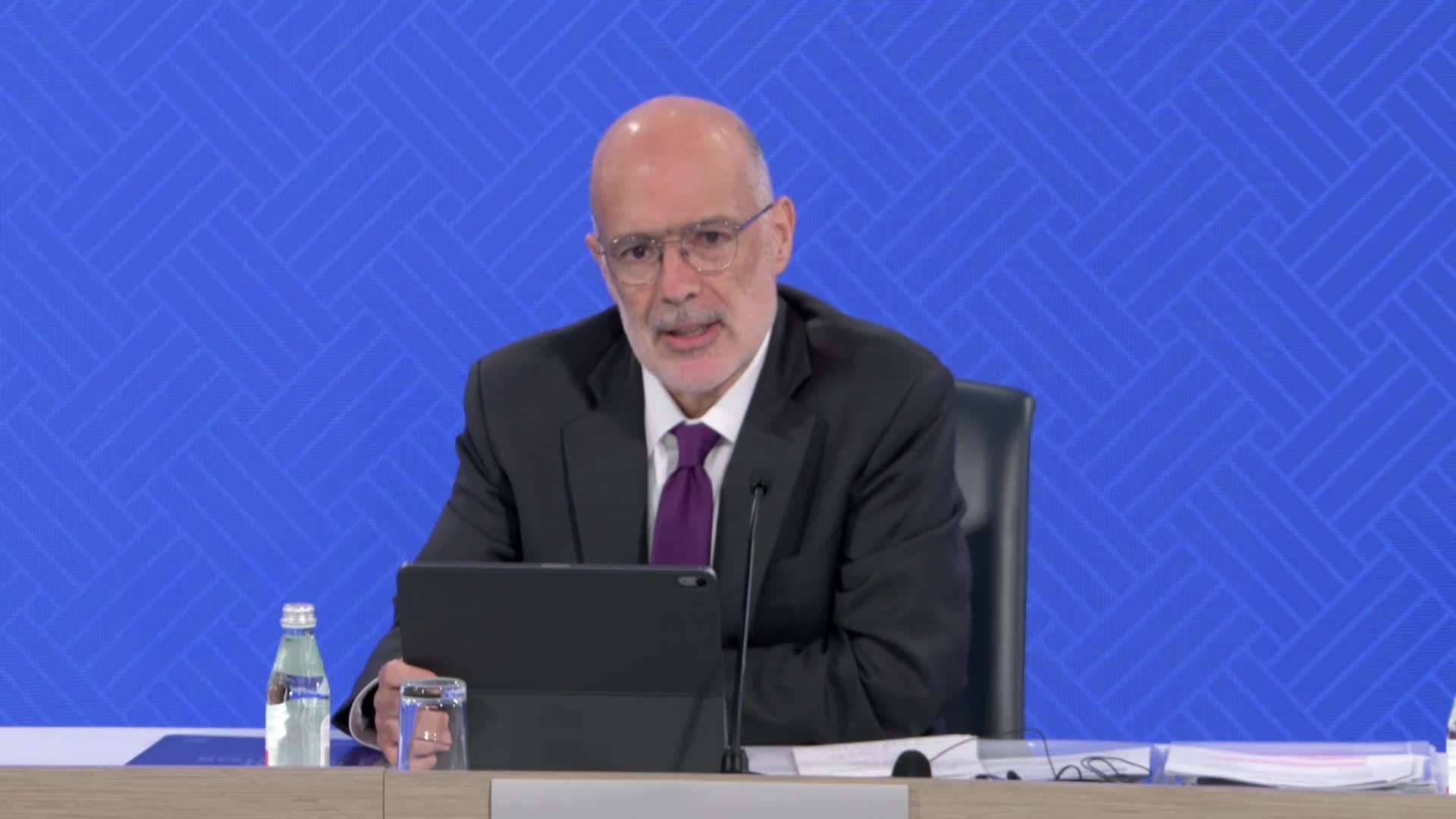
Public finances are under increasing strain as new shocks hit an already-constrained global economy, according to the Fiscal Monitor presented at the International Monetary Fund’s 2026 Spring Meetings. Rodrigo Valdez, Director of Fiscal Affairs, outlined how the consequences of the war in the Middle East are unfolding in a context of limited fiscal space, shaping both near-term policy responses and longer-term debt dynamics.
“There are abundant calls for fiscal support, given the pressures that households and firms are receiving from fuel and food prices increases. As countries respond, both focus and intensity matter. Our central advice, protect the most vulnerable while preserving the price signals to help economists adjust. And with that, already high in many places, a fiscal response must not put public finances at risk. Let me emphasize three points on this short run response. First, unless things change in a big way, fiscal policy should steer clear of discretionary demand stimulus. It would make just harder the central bank job in terms of inflation control. Second - and here I want to put a couple of slides - broad based energy subsidies or excise reductions are not the best tool. They distort price signals, are fiscally costly, regressive and hard to unwind. Plus, as I will illustrate in a minute, they create international spillovers. Third, when support is needed, it should be temporary and targeted to the most vulnerable. And it should be consistent with the fiscal framework and the sustainability of countries. In many places, expenditure reallocation is the viable alternative,” explained Valdez.
The scale and design of support may need to adapt to the severity of the shock, with measures tailored to reach specific populations and reflect differences between energy and food price pressures. Policies that suppress price signals can generate significant spillovers across countries and amplify global price movements, adding to fiscal costs. Beyond the immediate response, attention turns to more persistent challenges, as debt continues to rise and fiscal conditions show limited improvement despite recent growth resilience.
“This is not just a cyclical problem. It basically reflects policy choices, permanently higher spending and lower revenues. On top of this - where the world faces higher interest rates than in the past - if you compare this period of these five years with these five years pre-COVID, real interest rates are about 0.6% higher today - what countries are actually paying. As a result, public debt is projected to keep rising. We reference forecast global debt, which is 99% by 2028. And this 100% mark before then, that we had in the previous editions. The second point I want to make is that risks are significant. Global debt at risk - that is a very technical way to look at debt, that we define as the 95 percentile of projected debt distribution - so we are here thinking of not a point forecast but a distribution of forecast. If we look at that, we see that at the 95 percentile, debt could reach 121% in three year’s time,” Valdez pointed out.
These risks are not driven by the current conflict alone, but also by broader pressures including geopolitical fragmentation, political instability, and potential market repricing. A greater reliance on private investors and shorter debt maturities may increase sensitivity to shifts in market sentiment, contributing to more volatile financing conditions. In this environment, strengthening fiscal resilience becomes increasingly critical.
“Rebuild fiscal buffers once conditions stabilize and do so without delay. Crisis, of course, require emergency support and people focus in the crisis, but the ability to respond really depends on preexisting fiscal space. And too often the needed consolidation is postponed, debt only ratchets up, squeezing the fiscal space for the next crisis. Countries need tangible progress, anchoring credible medium-term fiscal frameworks, and clear communication. The longer the delay, the steeper the effort will be in the future, and the higher the possibility of not having an orderly fiscal consolidation. Finally, in low-income developing economies, a priority is to strengthen domestic revenue mobilization, to protect social and development spending, and also because we have to recognize that external aid is declining,” Valdez concluded.
To watch the full press briefing, click here: Press Briefing: Fiscal Monitor - April 2026
To read the full report, click here: Fiscal Policy under Pressure: High Debt, Rising Risks