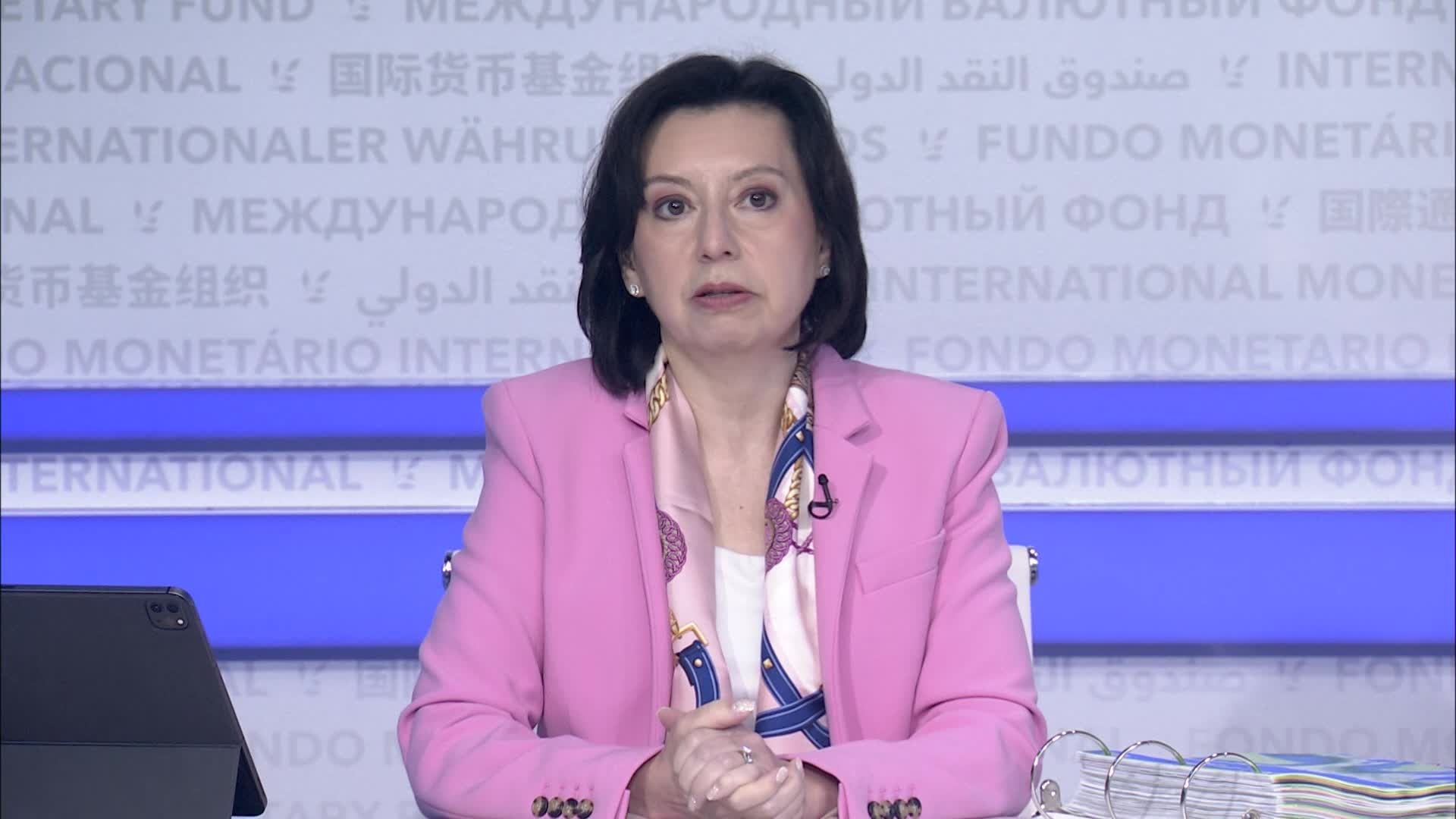
The International Monetary Fund held its regular press briefing today in Washington, with Communications Director Julie Kozack addressing a range of global developments — from a deadly earthquake in Venezuela to financial support for Ethiopia and the global impact of rising energy prices.
At the briefing, Kozack opened with condolences following a devastating earthquake in Venezuela, signaling the Fund’s engagement with authorities.
“Let me start by saying that we're deeply saddened by the impact of the earthquake on Venezuela. We express our deep sympathy to all of those affected, and our thoughts are with the people of Venezuela at this very difficult time for the country. Now turning to the questions, I don't have much to say at the moment, given that the earthquake has just happened. So, we're obviously closely monitoring developments, we've been closely engaged with the Venezuelan authorities, and we will remain closely engaged with them as they assess the economic impact and the recovery needs for Venezuela. And of course, part of those discussions will be how we can best support the authorities and the Venezuelan people as they recover from this tragedy.” Said Kozack,
She also provided an update on Ethiopia, where IMF staff recently reached a staff-level agreement that could unlock additional financing, pending Board approval.
“So, on Ethiopia, on June 3rd, IMF staff and the Ethiopian authorities reached a staff-level agreement on the fifth review of the ECF and subject to Executive Board approval, Ethiopia would have access to about $468 million and that would bring total IMF financial support under the ECF arrangement to around 2.6 billion US dollars. We do expect the Board meeting for this review to take place on July 1st. And as you mentioned, the fifth review is also aiming to re-phase disbursements under the ECF. So, the review is planning to bring forward $200 million to help Ethiopia respond to economic impact of the war in the Middle East and the energy shock. Total access under the program remains unchanged at the original $3.4 billion.” Added Kozack.
Kozack also underscored the widespread impact of the global energy shock, including on major economies like India.
“I think it's clear that the energy shock has had an impact globally and no country has really been untouched by the global shock. We did see that India did face supply disruptions with respect to energy. India was also affected by higher prices like most countries in the world because of the energy price shock. And of course, because India imports quite a lot of energy, we saw then of course the effect on the external balance as well as India's, the price at which India had to import energy increased. So, that does put pressure on costs and inflation. And it can also potentially add to some pressures on India's fiscal deficits. So, there is clearly an impact of the shock on India as in all other countries. I think from our perspective, some good news for India is that India entered this latest shock from a point of strength. It had strong growth momentum going into the energy price shock, inflation was low, the current account deficit was modest, and India has ample foreign exchange reserves. So that work on the macroeconomic side and those buffers that India built have been a source of resilience for the Indian economy despite the fact that of course there is still an impact from the shock.”
To watch the full press briefing, click here: IMF Press Briefing | June 25, 2026