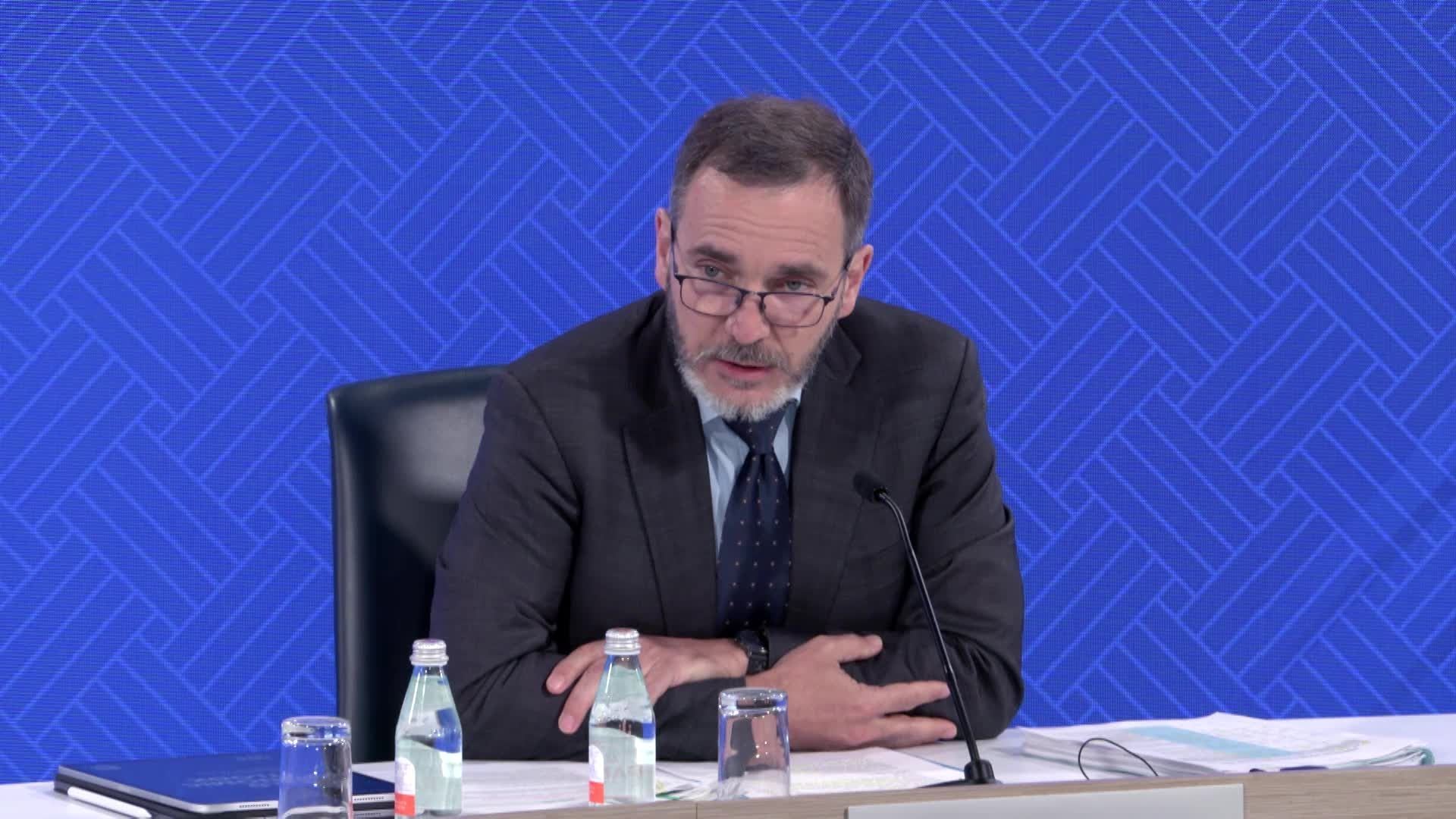
The global economic outlook is facing renewed uncertainty amid rising geopolitical tensions and shifting financial conditions, according to the World Economic Outlook presented at the International Monetary Fund’s 2026 Spring Meetings. Chief Economist Pierre-Olivier Gourinchas detailed the implications for growth and inflation.
“Despite major trade disruptions and policy uncertainty, last year ended on an upbeat note. The private sector adapted to a changing business environment, helped by lower-than-announced U.S. tariffs, fiscal support in some countries, favorable financial conditions, and a tech boom. Despite downside risks, this momentum was expected to carry into 2026, and we were looking to lift up our global growth forecast. Now, war in the Middle East has halted this momentum. The closing of the Strait of Hormuz and serious damage to critical energy facilities in the Middle East raised the prospect of a major energy crisis, should a durable solution not be found soon. Oil and gas prices have increased sharply, and so have the prices of diesel and jet fuel, fertilizer, aluminum and helium,” said Gourinchas.
The shock is expected to transmit through multiple channels, as rising commodity prices push up costs, disrupt supply chains, and weigh on purchasing power. These pressures could intensify if firms and workers attempt to offset losses, while tighter financial conditions may further dampen demand. Against this backdrop, the outlook is framed across a range of possible scenarios.
“Our reference forecast assumes a short-lived conflict and a moderate 19% rise in energy prices in 2026. Still, some damage will not be avoided. Global growth falls to 3.1% this year, a downgrade from January forecast and headline inflation rises to 4.4%. Our adverse scenario assumes further disruption, leading to higher energy prices and inflation expectations, and tighter financial conditions throughout the year. Growth falls to 2.5% this year and inflation rises to 5.4%. Our severe scenario assumes that energy supply disruptions extend into next year with greater macro instability. Global growth falls to 2% this year and next, while inflation exceeds 6%. Downside risks are clearly very elevated,” advised Gourinchas.
The effects are not expected to be evenly distributed, with more vulnerable economies facing greater exposure to rising energy costs and limited buffers. Even under a more contained shock, inflation dynamics could remain sensitive, and reducing inflation may come at a higher cost to employment than in previous episodes. This raises key questions about how policymakers should respond, including how central banks balance patience with readiness to act, how exchange rates are allowed to adjust, and what role fiscal policy should play.
“With rising public debt trajectory, fiscal space is much thinner than before. Price caps, subsidies and similar interventions are popular, but they distort prices. They're often poorly designed, hard to unwind, and extremely costly. Most countries don't have that luxury anymore. Where support for the most vulnerable is needed, targeted and temporary measures should be deployed consistent with medium term plans to rebuild fiscal buffers and avoiding stimulating demand where inflation is rising. Finally, if financial conditions tighten sharply - as in our severe scenario - and global activity deteriorates markedly, monetary and fiscal policy should be ready to pivot to support the economy and safeguard the financial system, alongside appropriate financial and liquidity policies. Now the war demands immediate attention, yet it should not derail from the pursuit of durable growth. It should also spur faster adoption of renewable energy, which can strengthen resilience to energy shocks, improve energy security and support the climate transition. Advances in artificial intelligence promise large productivity gains, lifting living standards, but the transition may be bumpy. Markets may well be ahead of fundamentals. New jobs will emerge, but some existing ones will also disappear. Policymakers should promote adoption while easing the labor market transition,” suggested Gourinchas.
To watch the full press briefing, click here: Press Briefing: World Economic Outlook - April 2026
To read the full report, click here: World Economic Outlook, April 2026: Global Economy in the Shadow of War