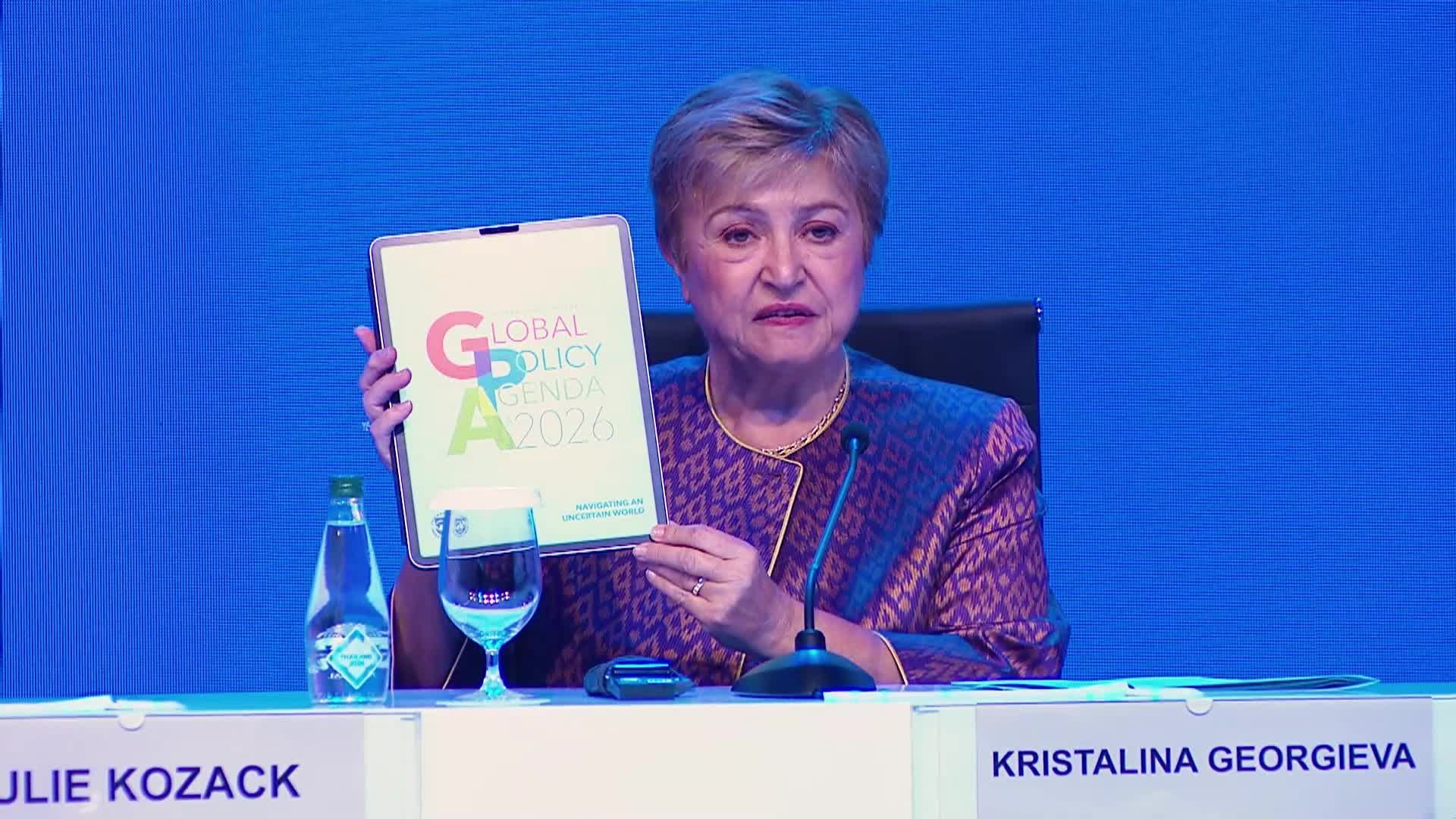
Managing Director of the IMF Kristalina Georgieva said Wednesday October 14, at the Annual Meeting in Bangkok, Thailand, that while the global economy is still resilient, that resilience is beginning to run out.
“We are here to present the global policy agenda.
It has been shaped by the assessment of the global economy. And as you heard yesterday, it remains resilient in the face of very frequent repetitive shocks and in the face of uncertainty. But this resilience is reaching its limits, buffers both energy and fiscal are being depleted. Inflation in many places is stubbornly high.
The growth trajectory is pulled in two opposite directions, dragged down by the negative energy supply shock triggered by the war in the Middle East and pushed up by the positive AI demand shock.
Who is generally doing better? Economies closely integrated in the AI supply chain.
Many of them are right here in Asia.
Also, energy exporters not affected by by wars are doing better. Who is taking the biggest hit? Low income countries and fragile and conflict affected states, especially those that are energy importers and or left out of the technology boom.
This time around advanced economies are the worst offenders.”
She continued, with a call to policymakers to enhance revenues, rationalize spending, and improve public financial management to help countries work together.
“What is our loudest call to policymakers right now? Make urgent repairs to the fiscal house before the cracks widen. Now is the time to enhance revenues, to rationalize spending and improve public financial management. As energy and food prices rise. Protect people, not prices.
Now may be a good time for a prudent, hawkish bias in many countries.
For governments it means improving the business environment, strengthening competition. Investing in digital and energy infrastructure and embracing active labor market policies.
And this brings me to the role of the IMF.
We take to heart our responsibility to help our members navigate the crosscurrents of the global economy. We strongly believe this is best done when countries work together.”
To watch the full briefing, click here.