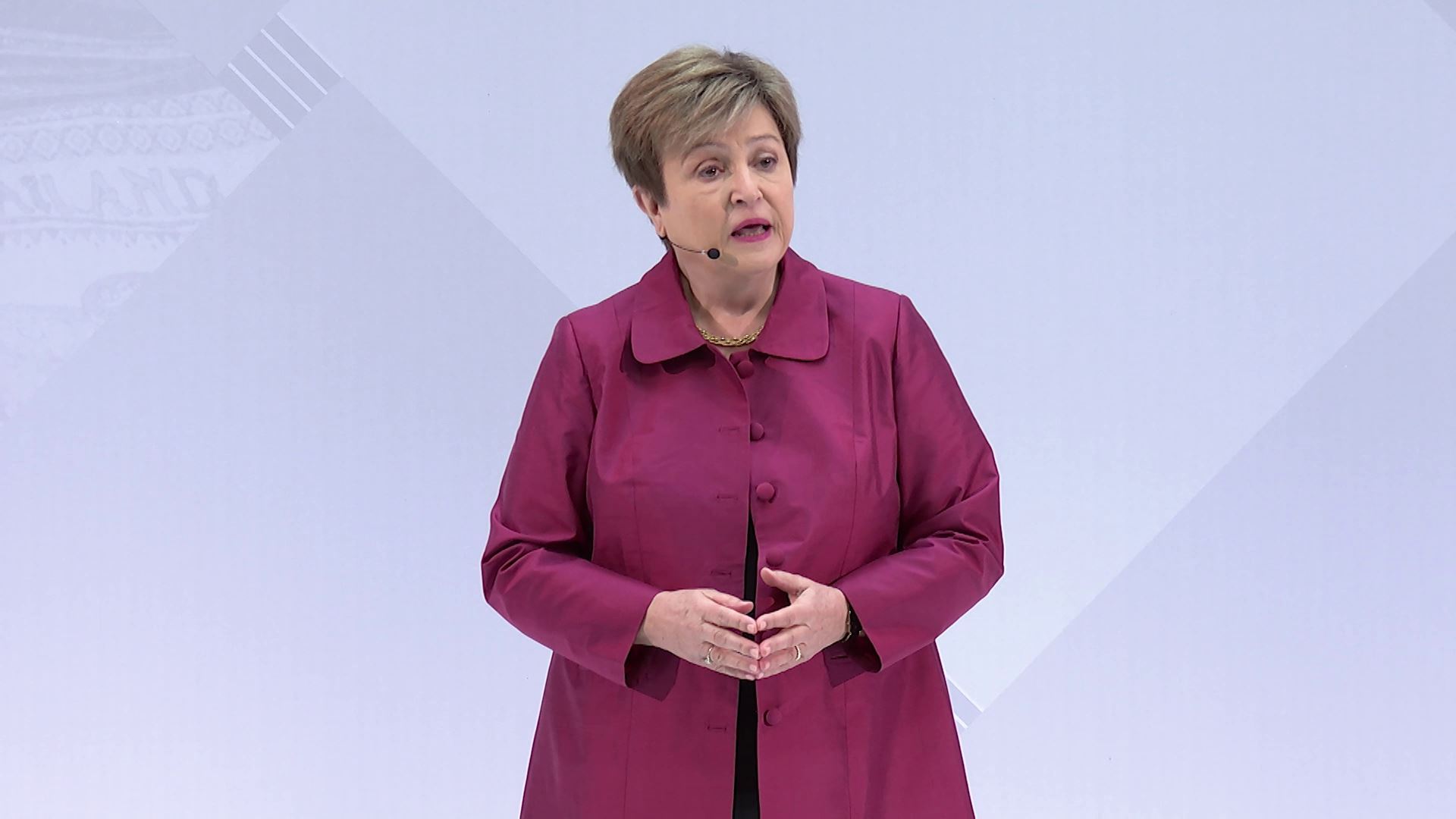
At the International Monetary Fund’s Spring Meeting curtain raiser, the IMF Managing Director welcomed delegates, offering a frank assessment of a world economy navigating its latest and most consequential shock ahead of the Spring Meetings next week.
“A resilient world economy is being tested again by now post-war in the Middle East. The conflict has caused considerable hardship in the region and around the globe. My heart goes out to all people affected by this war and all wars. Next week we would welcome ministers and central bank governors to our Spring Meetings, and our focus will be on how best to weather this latest shock and ease the pain on economies and on people. This requires understanding the nature of the shock, the channels through which it affects the economy, the size of the impact, and the policies that can mitigate it,” advised Georgieva.
The IMF's World Economic Outlook, to be published April 14, will present scenarios ranging from relatively swift normalization to a prolonged period of elevated energy prices — but regardless of which unfolds, some damage is already locked in.
"So, I appeal to all countries to reject go-it-alone actions, export controls, price controls, and so on that can further upset global conditions. Don't pour gasoline on the fire. You need this gasoline to drive your cars. The challenge will be to detect if and when changing conditions take us from one state of the world to another. For now, there is value in waiting and watching with central banks stressing their commitment to price stability, but otherwise staying on hold, with a stronger bias to action if credibility is in question. Fiscal authorities should provide targeted and temporary support to the vulnerable aligned with their medium-term fiscal frameworks," urged Georgieva.
On the fiscal side, the IMF is equally direct. Public debt is broadly higher than it was 20 years ago, including in most G20 countries- reflecting widespread neglect of fiscal consolidation in the periods when conditions permitted it.
"Good policies make a difference. They are forces countries cannot control, but they do have authority over their own policies and institutions. Take heed, the strength and agility of your fundamentals is your best defense when shocks come, and come, they will. And as you deal with the long tail of the current shock, do not forget to steer the great global transformations in technology, in demographics, in geopolitics, in trade, in climate, to build a better future. For us at the IMF, supporting you to build strong policies, to build stronger institutions, this is our raison d'etre. This is why we exist. And as the firefighter, we are here for you when a crisis hits," Georgieva concluded.
To watch the full event, click here.