In 1986 Lamborghini unveiled the extraordinary V12 off-roader that paved the way for the Urus family
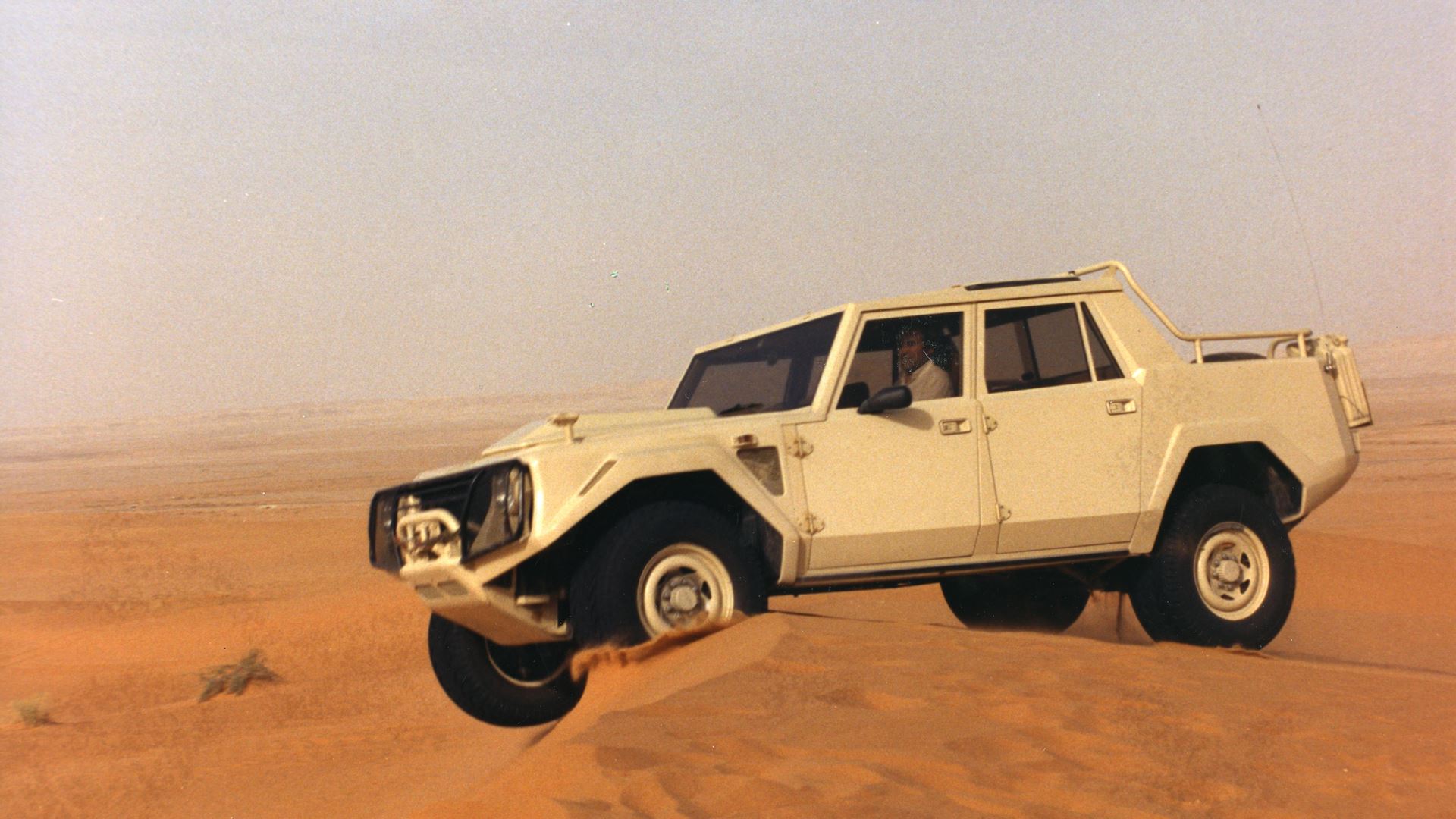
Sant’Agata Bolognese, 9 June 2026 – Forty years have passed since Lamborghini unveiled the LM002 at the Brussels Motor Show in January 1986, a vehicle destined to redefine the very concept of the high-performance off-roader. More than an extreme machine, the LM002 was a bold statement of intent, combining the DNA of Sant’Agata Bolognese super sports cars with unprecedented off-road capability.
“The LM002 represents one of the roots of Lamborghini’s contemporary vision,” said Stephan Winkelmann, Chairman and CEO of Automobili Lamborghini. “Far ahead of its time, it anticipated the concept of the Super SUV, inspiring not only our product philosophy but also design elements that can still be found today throughout the Urus family.”
The origins of the LM002 trace back to the experimental Cheetah and LM001 projects developed between the late 1970s and early 1980s, leading to the decisive technical insight of Giulio Alfieri: the repositioning of Lamborghini’s legendary V12 engine to the front for greater balance and control across the most challenging terrain. Following years of extreme testing in the deserts of Saudi Arabia, the definitive LM002 was born.
Powered by the Countach Quattrovalvole V12, equipped with specially developed Pirelli Scorpion BK tires and engineered to tackle sand, rocks and steep gradients, the LM002 was capable of exceeding 200 km/h, an extraordinary achievement for an off-road vehicle of its era. Produced until 1992 in just 300 examples, plus a unique right hand drive example now displayed at the Lamborghini Museum in Sant'Agata Bolognese, the LM002 is now regarded as the true predecessor of the modern Lamborghini Super SUV concept and the technical and philosophical foundation that would eventually lead to the birth of the Urus.
Today, the LM002 continues to be preserved and enhanced by Lamborghini Polo Storico through projects dedicated to maintaining its technical authenticity, including the collaboration with Pirelli that recently brought the historic Scorpion BK tires, originally developed specifically for this model, back into production. These tires are once again available to Lamborghini customers through the brand's official dealer network and the Pirelli Collezione catalogue.
The LM002 is one of the permanent highlights of the Lamborghini Museum in Sant’Agata Bolognese, where from 9 June a dedicated installation marks the 40th anniversary of Lamborghini’s first Super SUV.
Lamborghini Cheetah – the genesis of the project
Automobili Lamborghini’s entry into the world of high-performance off-road vehicles began with a pioneering vision that challenged automotive conventions at the 1977 Geneva Motor Show. On that occasion, the Sant’Agata Bolognese manufacturer unveiled the Cheetah, an all-wheel-drive prototype that marked a radical stylistic and technical departure from the grand touring sports cars the company had produced until then.
Developed in collaboration with the American company Mobility Technology International (MTI), the project was originally conceived to meet tactical and military mobility requirements, with the ambition of attracting interest from both the United States armed forces and Middle Eastern markets. Technically, the Cheetah featured a tubular steel chassis combined with an open aluminum body structure incorporating inspection hatches, exposed tubular elements and an open cockpit.
The powertrain adopted an unusual rear-mid-engine layout for a four-wheel-drive vehicle of this kind. At its heart was a 5.9-liter Chrysler V8 producing 183 CV at 4,000 rpm and 362 Nm of torque at 2,500 rpm. The engine was paired with a three-speed Chrysler A727 automatic transmission and permanent all-wheel drive.
The suspension setup featured double wishbones, coil springs and an anti-roll bar at the front, while the rear adopted a similar architecture enhanced by an adjustable torsion bar. The braking system used ventilated front disc brakes shared with the contemporary Lamborghini Countach.
The Cheetah was capable of tackling gradients ranging from 60% to 85%, while reaching a top speed of 167 km/h on road and approximately 140 km/h on sand. Acceleration from 0 to 100 km/h took just nine seconds, despite a declared dry weight of around 2,042 kg.
Although production never progressed beyond a single prototype, the Cheetah became a crucial experimental platform for Lamborghini. The boldness of this first project established the technological path that would later define the brand’s approach to high-performance SUVs, demonstrating Sant’Agata Bolognese’s determination to push beyond conventional limits on every type of terrain.
From LM001 to LM002 (passing by LM003 and LM004) – the development
The LM001 (Lamborghini Militare 1) marked the second crucial chapter in the evolution of Lamborghini’s off-road vehicles, representing the transition from the experimental nature of the Cheetah to a more ambitious and structured engineering vision.
Presented at the 1981 Geneva Motor Show, the LM001 was the first tangible result of the Mimran era, during which Lamborghini sought to diversify its production by exploring both the luxury off-road and tactical vehicle segments. Under the technical direction of engineer Giulio Alfieri, the project was designed to appeal not only to civilian enthusiasts, but also to governmental and military markets, particularly in the Middle East.
Unlike the Cheetah, the LM001 adopted a closed four-door body with angular lines, conceived to facilitate the possible integration of armored protection. The project’s defining innovation was the adoption of Lamborghini’s legendary Countach V12 engine: the 4.8-liter powerplant from the LP500 S producing 332 CV at 6,000 rpm, although the first and only prototype initially experimented with a 5.9-liter AMC-derived V8.
The vehicle featured permanent four-wheel drive combined with a three-speed Chrysler A-727 automatic transmission, with torque distribution heavily biased toward the rear axle. Measuring 4,790 mm in length and 2,000 mm in width, the LM001 offered an impressive ground clearance of 425 mm in its central section. Despite a curb weight ranging between approximately 2,100 and 2,400 kg, the vehicle was capable of 180 km/h and accelerating from 0 to 100 km/h in around 12 seconds.
However, desert testing soon revealed a major structural limitation: the rear-mounted engine layout. Under heavy acceleration and steep climbs, the front axle became excessively light — further complicated by the absence of power steering — and negatively affecting steering precision and directional stability.
Although it never progressed beyond the prototype stage, the LM001 became a fundamental technical laboratory for Lamborghini. The vehicle introduced advanced suspension solutions for extreme terrain, including independent suspension with wishbones, torsion bars and telescopic dampers. The challenges encountered in weight distribution, vehicle dynamics and engine cooling ultimately pushed Lamborghini engineers toward a complete rethinking of the architecture. This led directly to the development of the LMA (Lamborghini Militare Anteriore), where the engine was finally relocated to the front, laying the foundations for the future production LM002.
To overcome the limitations of the LM001, Giulio Alfieri and his team completely redesigned the vehicle architecture. The new front-engine layout not only improved weight distribution, but also introduced a more balanced three-box design.
The LMA represented far more than a simple repositioning of the powertrain. It combined motorsport-derived engineering solutions with heavy-duty off-road capability. The Countach-derived 4.8-liter V12 producing 332 CV was retained, while the previous Chrysler automatic transmission was replaced by a more robust five-speed ZF manual gearbox equipped with low-range gearing. Unlike the permanent four-wheel-drive systems of earlier prototypes, the LMA also allowed the driver to disengage the front axle and operate the vehicle in rear-wheel-drive mode.
Presented at the 1982 Geneva Motor Show, the LMA appeared as a true engineering laboratory on wheels. The vehicle grew to nearly 4.9 meters in length and reached a total weight of approximately 2,600 kg, reflecting its significantly evolved architecture.
Testing was pushed to extremes in the deserts of Saudi Arabia, where the vehicle proved capable of climbing gradients of up to 120% and reaching speeds close to 190 km/h. These results confirmed the validity of the new technical configuration, transforming the LMA into the definitive foundation upon which the legendary LM002 would be developed and launched in 1986.
Alongside this development path, Lamborghini also explored alternative technical solutions. The LM003 represented the only chapter in the original “Lamborghini Militare” program dedicated to diesel experimentation. Developed in 1983, the prototype was conceived to evaluate the feasibility of a high-performance off-roader offering greater efficiency and usability compared with the powerful but fuel-hungry V12 petrol engines.
For this project, Lamborghini turned to Italian specialist VM Motori, equipping the LM003 with a five-cylinder turbo-diesel engine producing 150 CV. Despite the theoretical appeal of a diesel-powered variant, testing quickly demonstrated that the available power was insufficient for a vehicle approaching three tons in weight, and the project never evolved beyond the prototype stage.
In 1985, Lamborghini introduced the LM004, an even more extreme experimental concept fitted with a marine-derived engine. The project represented an attempt to push the technical limits of the LM range even further by exploring powertrain solutions inspired by offshore racing.
At the heart of the LM004 was the Lamborghini L804, the competition version of the brand’s V12 engine developed for offshore powerboats. Producing more than 420 CV and 589 Nm of torque at just 2,000 rpm, the massive seven-liter engine required a lengthened chassis compared with the later production LM002.
Despite its extraordinary performance potential, the LM004 project was eventually abandoned. The excessive weight of the marine engine and concerns regarding reliability made it less effective overall than the 5.2-liter V12 ultimately selected for the production LM002.
LM002 – The definitive product
The Lamborghini LM002 represents a unique chapter in automotive history. Produced between 1986 and 1992, it was the world’s first true Super SUV, combining the performance of a super sports car with unprecedented off-road capability. Unveiled at the 1986 Brussels Motor Show, the LM002 immediately captured attention thanks to its imposing presence and uncompromising character.
At the heart of the LM002’s iconic status was its powertrain, derived directly from the legendary Countach Quattrovalvole. The 5,167 cc 60-degree V12 engine, equipped with four valves per cylinder, delivered approximately 450 CV (420 CV in SAE NET specification), enabling the more than 2,700 kg Lamborghini off-roader to reach a top speed of 210 km/h. Initially equipped with six Weber carburetors, the engine later evolved into an electronically fuel-injected version introduced in 1989 and certified for the United States market.
The transmission system featured a five-speed ZF manual gearbox with low-range gearing and selectable all-wheel drive, allowing the LM002 to tackle gradients of up to 120%. The drivetrain incorporated three self-locking differentials, with locking rates of 25% at the front and 75% at the rear. The central differential also featured a 75% locking rate and could be mechanically locked up to 100%, solutions directly derived from the experience gained during development of the LMA prototypes.
The LM002 was not only exceptionally fast, but also massively overengineered to withstand extreme operating conditions. Its reinforced tubular steel chassis was capable of تحمل forces up to eight times the acceleration of gravity, while the fully independent suspension system with wishbones provided generous wheel travel, with 130 mm in compression and 110 mm in extension. The vehicle could also ford water up to 82 cm deep without requiring special preparation.
Supporting the LM002’s extraordinary capabilities were the Pirelli Scorpion BK tires, developed specifically for the vehicle during the early 1980s. These tires became famous for their distinctive sidewall “ears,” specially designed to allow the LM002 to float more effectively across desert dunes while maintaining directional precision on sand. They could also operate in deflated run-flat conditions while handling high lateral loads.
Pirelli engineered the Scorpion BK with an ultra-robust carcass reinforced with aramid anti-cut materials, while the tread pattern drew direct inspiration from rally competition tires, particularly the Pirelli Intermedio Montecarlo used in world rally events. The result was one of the earliest examples of motorsport technology transfer from competition to road-going vehicles.
Off-road luxury and special versions
Despite its angular exterior design and imposing dimensions, the LM002’s cabin represented the height of handcrafted luxury for its era. The interior featured premium leather upholstery and fine wood trim, while equipment included air conditioning, tinted blue windows, a roof-integrated high-fidelity sound system and, upon request, even a television set. The LM002 offered seating for four occupants inside the cabin, while the large rear cargo area further emphasized the vehicle’s extraordinary versatility.
In 1987, the LM002 carried a price tag of approximately 169 million Italian lire, reflecting both its technological exclusivity and the absence of any direct competitors. Production ended in 1992 after a total of 301 examples had been built, including vehicles destined for the North American market, where the LM002 officially arrived from 1989 onwards.
The LM/American represented the technological evolution of the LM002. Produced in a limited series of just 60 units, this version was specifically reengineered to comply with strict United States and California emissions regulations.
In 1989, legendary rally driver and Lamborghini PR manager Sandro Munari took part in the American “One Lap of America” endurance competition, a demanding event spanning approximately 10,000 miles across multiple US states. The vehicle used for the race was a production-specification LM002 identical to the version homologated for the American market.
The most significant evolution introduced on the LM/American concerned the fuel delivery system of the 5,167 cc V12 engine. To comply with increasingly restrictive emissions regulations that the traditional Weber carburetors could no longer satisfy, Lamborghini developed an advanced multipoint electronic fuel injection system.
The vehicle adopted the internally developed Lamborghini LIE 52/12 system, engineered with the support of Bologna-based company EFI after more expensive external solutions had been evaluated and discarded. Catalytic converters were also introduced to reduce harmful emissions and ensure compliance across all US states. In this configuration, the fuel-injected V12 delivered a certified output of 420 CV SAE NET.
Beyond the engine electronics, the LM/American also featured several adaptations linked to both regulatory requirements and the revised technical layout. Due to the packaging requirements of the new injection components and safety regulations, fuel tank capacity was reduced from 280 liters on carbureted versions to 180 liters.
Today, the LM002 remains one of the purest expressions of Lamborghini’s uncompromising philosophy: an extraordinary and unconventional vehicle that anticipated the world of ultra-high-performance SUVs decades before the segment became globally established.
A living legacy: from LM002 to Urus
The LM002 forged a path that simply did not exist at the time, becoming the true precursor of the modern high-performance luxury SUV. Decades later, this legacy was reinterpreted with the unveiling of the Urus concept in 2012, a bold and muscular SUV that openly referenced the LM002 while translating Lamborghini DNA into a modern and versatile format.
With the debut of the production Urus in 2017, Lamborghini once again redefined the segment by creating the modern Super SUV. Thanks to benchmark performance figures — including a top speed of 305 km/h that made it the world’s fastest SUV at launch — the Urus confirmed Lamborghini’s legitimacy in a category that the LM002 had courageously explored decades earlier.
Today, the LM002 continues to be preserved and enhanced by Lamborghini Polo Storico, the department dedicated to safeguarding the brand’s historic heritage. Through restoration services, certifications of authenticity and research, recovery and reconstruction of original spare parts, Polo Storico supports LM002 owners worldwide while helping preserve one of the most iconic models in Lamborghini history.
Among its most significant initiatives is the collaboration with Pirelli for the recreation of the historic Scorpion BK tires, originally developed specifically for the LM002 in the early 1980s and now once again available globally through Lamborghini’s official dealer network.